
The Annual Home Demand Index is used by real estate professionals to gauge the home demand in a market area for a period of one year. It takes into account factors like buyer activity, inventory levels, and overall market conditions. It measures how strong or weak the demand is relative to the number of homes for sale.
When it comes to the month a house is listed, the Annual Home Demand Index can offer some useful insights. For example: In January the home demand index is low, but buyer activity picks up in February to April. After that many houses get listed. So, listing a house before late spring and summer is a good time to catch increased demand but not compete with many listings.
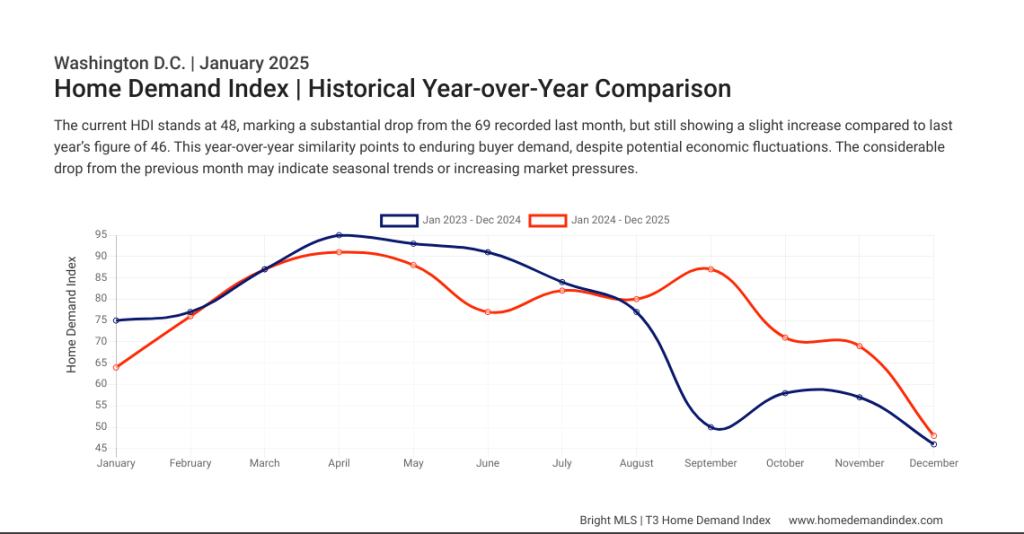
Seasonality: The index can highlight whether the time of year is a “high-demand” or “low-demand” period. For example, demand tends to be higher in spring and summer. Because many buyers prefer to move during these months due to school schedules and weather. A house listed in a month with high demand can get more buyer interest and higher offers.
Price Strategy: If a house is listed during a month with a low demand it affects the pricing strategy. Homes listed during slow months need more competitive pricing or enhanced marketing to attract buyers.
Buyer Competition: A high demand month usually indicates more buyers in the market, meaning there’s more competition for homes. Sellers listing during these months may see quicker sales and multiple offers. While homes listed during lower-demand months might sit on the market longer.
Market Trends: By looking at trends over the course of the year, the index can determine whether a particular month favor sellers or buyers. If a market is experiencing high demand but the supply of homes is limited, a seller has an advantage for getting a higher price for their home.
In summary, the Annual Home Demand Index provides a snapshot of the broader market conditions and helps both sellers and buyers understand the best timing for listing or purchasing a home. It can be a valuable tool for determining how competitive the market will be in the month a house is listed.
See home demand index for Washington DC.
To get a market report for your neighborhood, subscribe here:
 Beltway Suburban Realty